An AI QMS is a quality management system that uses AI to collect and analyze quality data as it's generated, flag deviations and trends early, automate routine logging and reporting, and keep records audit-ready. It doesn't replace your quality team or its judgment; it gives the team faster signals and less paperwork.
Most quality systems were built for a slower pace. Teams are now expected to move fast, meet tighter regulations and still catch every issue before it reaches the customer. When quality data lives in spreadsheets and reporting feels like a second job, things slip. That's a tools problem, not a people problem. This is where an AI QMS helps: not by replacing your team, but by giving it faster answers, clearer signals and fewer surprises.
Key takeaways
- An AI QMS helps teams catch quality issues early, automate routine tasks and cut manual reporting, so audits stop being a scramble.
- It supports quality teams rather than replacing them: faster alerts, clearer insights, fewer preventable mistakes.
- AI assistants such as ChatGMP, DeepGMP and LIMS AI can work alongside the QMS you already run. They complement it; they don't replace it.
- Start small. Pick one high-friction area, such as deviation logging or compliance tracking, then expand.
- AI is the assist. Your people still own the process and the decisions.
What is an AI QMS?
An AI-powered quality management system (QMS) helps teams catch quality issues earlier, reduce manual effort and stay compliant without getting buried in spreadsheets. See also AI tools for the pharmaceutical industry for how GMP assistants, CAPA reasoning and LIMS automation fit next to a QMS.
How does an AI QMS work?
AI QMS tools gather and analyze quality data in real time, which shortens the gap between when something goes wrong and when someone notices. Instead of digging through reports, teams get alerts and insights automatically. These systems learn patterns over time, so they don't just spot problems; they start to predict them.
How is an AI QMS different from a traditional QMS?
| Feature | Traditional QMS | AI-powered QMS |
|---|---|---|
| Data entry | Manual | Automated |
| Issue detection | After-the-fact reports | Real-time alerts |
| Decision making | Human-driven | Human-driven, data-assisted |
| Compliance tracking | Paper trails, manual logs | Auto-logged, searchable records |
| Scalability | Hard to scale | Grows with operations |
What doesn't an AI QMS do?
An AI QMS doesn't manage quality on its own. It supports the people doing the work. It won't replace QA teams or remove the need for oversight; it makes the job faster and easier to manage at scale.
Why do quality teams need AI?
Most quality problems aren't hard to solve. They're hard to see in time. That's the gap AI helps close.
Lots of data, not enough insight
Sensors, machines, checklists and forms generate quality data every day, but most teams don't have the time or tools to make sense of it. AI surfaces patterns, flags risks and shows your team where to focus, without days of manual digging.
Compliance is getting tighter
Between ISO, the FDA and internal policies, documentation isn't optional. One missed log or incomplete report can trigger findings, fines or worse. AI QMS tools help you stay ready by automatically tracking changes, updates and out-of-spec events.
Mistakes are expensive
One defect, one bad batch or one missed deviation can hurt both margins and reputation. Earlier warnings mean fewer recalls, less rework and more trust from customers and regulators.
What are the benefits of an AI QMS?
Teams don't need more dashboards; they need fewer problems. A good AI QMS helps fix quality issues faster, not just track them.
Catch problems before they spread
AI learns what might go wrong, not just what already has. You see warning signs and act while the issue is still manageable, and root cause analysis goes faster when something does slip.
Less busywork
Manual logs, repetitive reports and back-and-forth approvals can largely be automated. Your team spends less time documenting and more time improving, and nobody has to chase missing data.
Better-informed decisions
Quality management is about knowing where to act and when. AI puts the relevant information in front of your team before they need to make a call. It informs judgment; it doesn't replace it.
Ready for audits
When quality data is scattered, audits are a scramble. An AI QMS keeps records logged and searchable without manual prep, so a surprise inspection looks much like a scheduled review.
Where is AI used in quality management today?
Manufacturing: spot defects before they hit the line
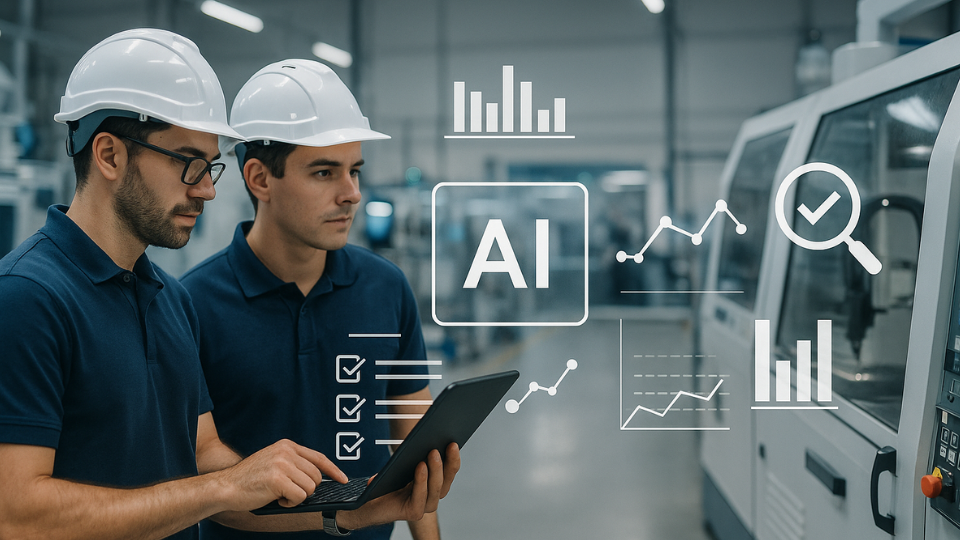
A single defective part can stall production, cut margins and delay delivery. AI systems analyze machine data in real time to catch small deviations before they become expensive failures, like a second set of eyes on every process that doesn't get tired. See also the impact of AI in manufacturing.
Pharmaceuticals: keep compliance tight without the paper pile
In regulated industries, a missing log or unverified change can stall a product line. AI QMS tools document activity, flag gaps and alert teams to out-of-spec events, so records are in order and searchable before the audit starts. More in AI in pharmaceuticals.
Food and beverage: consistency at scale
When taste, texture and shelf life depend on tight specs, there's no room for guesswork. AI tracks each stage, from ingredient quality and processing temperatures to packaging integrity, and flags inconsistencies before product reaches the shelf.
Electronics: less rework, better first-pass yield
Tiny variances can make or break a product. AI helps identify recurring issues in the production process so fixes become proactive rather than reactive. Over time the system learns what normal looks like for your line.
What should you look for in an AI QMS tool?
The right tool makes your team's job easier instead of adding another system to babysit.
1. It connects with what you already use
If the tool can't pull from your ERP, MES or production software, you've created another silo. Look for clean integration with your existing stack.
2. It doesn't take a data scientist to use
Insights should be easy to find and easier to act on, especially for people on the floor. Think clear alerts and simple views, not a 50-page manual.
3. It scales with your operations
Whether you add a product line or a site, the system should keep pace. Avoid rigid workflows or pricing that punishes growth.
4. It keeps records audit-ready from day one
Every action, change and exception should be logged automatically, not left to someone's memory. You want clean, searchable records that don't have to be compiled by hand.
5. It takes security seriously
You're dealing with sensitive data: production specs, regulatory information, customer feedback. Look for role-based access, encrypted storage and alignment with standards like ISO 27001 or SOC 2.
Where do ChatGMP, DeepGMP and LIMS AI fit alongside your QMS?
TheoSym doesn't sell a QMS. We build AI assistants that sit next to the QMS you already run and take on specific, time-consuming parts of quality and lab work. They complement your system of record; they don't replace it.
- ChatGMP answers GMP questions from your SOPs and the relevant regulations, so staff get a sourced answer without hunting through binders. It's built on QGI.
- DeepGMP reasons through deviations and CAPAs step by step and keeps an audit trail of how it reached each recommendation. It's also built on QGI.
- LIMS AI connects to your LIMS and automates routine lab workflows such as sample handling, results, certificates of analysis and audit preparation.
Your QMS stays the place where records, approvals and sign-offs live. These assistants help your people get to the right answer faster; the quality decisions remain with your team.
How do you get started with an AI QMS?
Adding AI doesn't have to mean overhauling everything. Most teams need a clear starting point, not a massive rollout.
Ask the right questions first
Before you compare features or pricing, get clear on the problems you're trying to solve:
- Where are we losing time or visibility?
- What happens today when a quality issue shows up?
- Who needs access to what information, and how fast?
The answers tell you what matters most in a new system.
Start with one process
Pick one high-friction process, such as logging deviations, tracking CAPAs or preparing for audits, and build from there. Get a quick win, then expand.
Involve the people who'll use it
No tool works if it sits in a corner. Bring in quality managers, production leads and frontline staff early, and show them how the system helps them, not just the business. Adoption follows value.
Does an AI QMS replace your quality team?
No. AI QMS tools aren't there to run your plant or write your SOPs. They take guesswork and busywork off the table and surface problems early, which gives your team more time for the work that actually protects quality. In the end, quality is about trust, and the people who earn it every day. If you're a smaller operation weighing where AI fits, see our guide to AI for small business.
Frequently asked questions
What is an AI QMS?
An AI QMS is a quality management system that uses AI to analyze quality data as it is generated, flag deviations early, automate routine logging and reporting, and keep records audit-ready.
Does an AI QMS replace the quality team?
No. It supports the people doing the work with faster alerts and clearer insights, but it does not remove the need for oversight or human judgment.
How is an AI QMS different from a traditional QMS?
A traditional QMS relies on manual data entry, after-the-fact reports and paper logs. An AI QMS automates data capture, sends real-time alerts and keeps compliance records auto-logged and searchable.
What should I look for in an AI QMS tool?
Look for integration with your ERP, MES or production software, ease of use for frontline staff, room to scale, automatic audit logging, and strong security such as role-based access and encrypted storage.
Does TheoSym sell a QMS?
No. TheoSym builds AI assistants that work alongside your existing QMS: ChatGMP answers GMP questions from SOPs and regulations, DeepGMP reasons through deviations and CAPAs with an audit trail, and LIMS AI connects to your LIMS to automate lab workflows.
How should a team start with AI in quality management?
Start with one high-friction process, such as logging deviations, tracking CAPAs or audit preparation. Get a quick win, involve the people who will use it, then expand.
For quality and lab teams
Put GMP knowledge and deviation work on AI you can audit
ChatGMP answers GMP questions from your SOPs and the regulations. DeepGMP works through deviations and CAPAs step by step. Both are built on QGI and work alongside the QMS you already run.